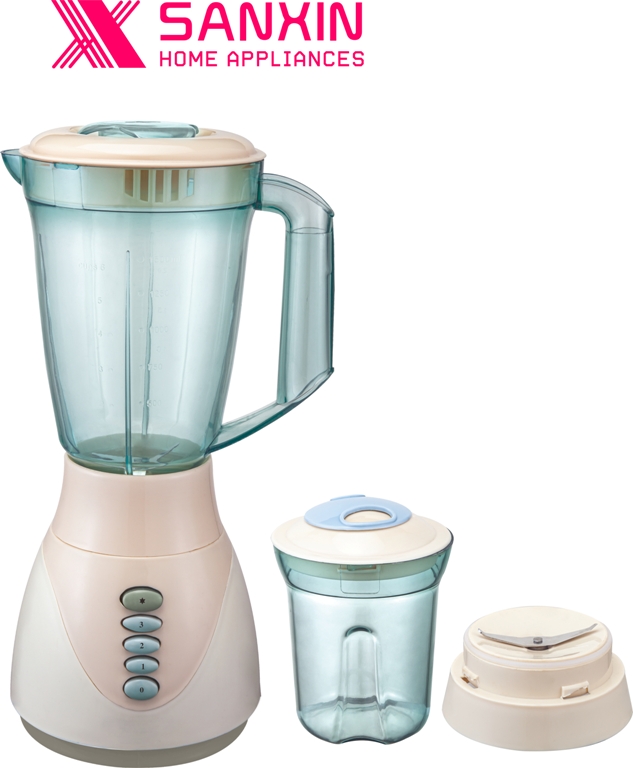
When it comes to food preparation, many buyers wonder if a blender can serve as a replacement for a food processor. While both appliances share some similarities, they are designed for different functions. As a professional food blender manufacturer, we’ll clarify the differences, explain when a blender can be used as an alternative, and highlight the strengths of our product range.
Key Differences Between a Blender and a Food Processor
- Blenders are primarily designed for liquids and smooth textures. They excel at making smoothies, soups, sauces, and purees.
- Food Processors handle dry or semi-solid foods. They are built for chopping, slicing, shredding, and kneading dough.
- Blade Design: Blender blades are angled for creating a vortex to pull ingredients down, while food processor blades are flatter and wider for cutting and grinding.
- Jar Shape: Blenders have tall, narrow jars for blending liquids, whereas food processors feature wide bowls for dry ingredients.
When You Can Use a Blender Instead of a Food Processor
-
Making Sauces and Purees
Blenders can easily create smooth tomato sauce, hummus, or baby food. -
Grinding Soft Ingredients
With enough liquid, a blender can grind nuts into nut butter or seeds into paste. -
Mixing Batters
Thin batters for pancakes, waffles, or crepes can be mixed in a blender. -
Chopping in Small Batches
Pulse settings on blenders allow some light chopping of vegetables or herbs, though results may not be as even as a processor.
When a Blender May Not Be Ideal
- Shredding or Slicing: Blenders cannot slice vegetables or grate cheese.
- Kneading Dough: Food processors are better equipped for handling dough mixing.
- Large Dry Mixtures: Blenders require liquid to work effectively, so dry chopping is limited.
Our Food Blender Solutions
As a supplier, we manufacture a wide variety of food blenders to meet different customer needs:
- Stainless Steel Blender – durable and professional-grade for long-term use.
- 2 in 1 Blender – combines blending and grinding functions in one unit.
- 3 in 1 Blender – versatile design with multiple attachments for more tasks.
- Plastic Jar Blender – lightweight and cost-effective for everyday use.
- Glass Jar Blender – sturdy and elegant, resistant to staining and odors.
All our blenders are built with high-performance motors, sharp stainless steel blades, and customizable designs (OEM/ODM) to meet the requirements of global buyers.
Conclusion
Yes, you can use a blender instead of a food processor for certain tasks such as pureeing, blending liquids, and grinding soft ingredients. However, for shredding, slicing, or kneading, a food processor remains more effective. Our range of food blenders provides versatile, durable, and high-quality solutions that can cover many food preparation needs, making them an excellent investment for both home and commercial kitchens.