

Choosing between a blender and a food processor is not about which machine is better. It is about which machine matches your ingredients, texture targets, batch size, and workflow. In commercial prep and serious home kitchens, the fastest setup is the one that minimizes rework: a blender for liquid-driven mixing and fine emulsions, and a food processor for controlled chopping, slicing, shredding, and dough-style mixing where ingredients need to stay structured.
If you are sourcing for retail, hospitality, or food-service projects, it also helps to choose a supplier that can keep performance consistent across batches and support OEM or model extensions as your category expands. Sanxin focuses on in-house production, quality management, and stable supply, so you can scale product selection with fewer surprises.
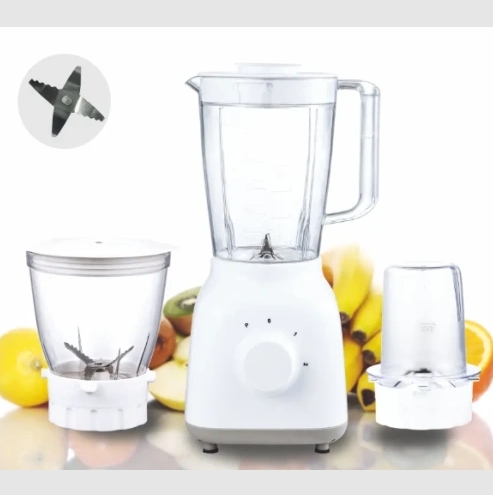
Core Working Principle: Why They Perform Differently
A blender creates a strong vortex inside a tall jar. The blades pull ingredients downward into the cutting zone, and the mixture circulates until it becomes smooth. This design is most efficient when there is enough liquid to keep ingredients moving continuously.
A food processor uses a wide bowl and interchangeable attachments. Ingredients spread across a larger surface area, and the machine processes them by contact and repeated passes through the blade or disc. This design is most efficient when you want texture control, uniform cutting, and repeatable prep results without needing a lot of added liquid.
What Each Appliance Is Best At
Blender strengths in real kitchens
A blender is the right tool when the end product must be pourable, aerated, or finely emulsified. It is commonly used for smoothies, milkshakes, soups, sauces, salad dressings, and beverage bases because it can combine liquid and solids into a uniform result with minimal manual intervention. For operations that standardize drinks or sauces, blender workflow is easier to repeat because the output is primarily driven by time, liquid ratio, and speed.
Blenders are also preferred for emulsions and smooth textures, such as mayonnaise-style sauces, creamy purees, and foam-like mixes. If your process requires a consistent mouthfeel with no noticeable particles, a blender is usually the faster and more reliable option.
Food processor strengths in real kitchens
A food processor is the right tool when you need structured textures and batch consistency in cutting. It is commonly used for chopping vegetables, shredding cheese, slicing cucumbers or onions, mixing pastry-style dough, making pesto, grinding nuts, and preparing fillings where you want visible pieces and controlled particle size.
It is also a productivity tool for prep stations because discs can create uniform slices or shreds quickly, which supports portion control and consistent cooking times. If you manage a menu where prep uniformity affects plating and cost, a food processor often reduces labor more than a blender.
Texture Outcomes: Smooth vs Structured
A blender is designed to remove texture. Even when you start with chopped ingredients, the vortex and high shear tend to push the output toward smoothness. This is ideal for beverages and sauces, but it can damage delicate textures, such as chunky salsa or salad-style mixtures, unless you pulse carefully.
A food processor is designed to preserve texture. You can stop earlier to keep a coarse chop, or run longer for a finer mince. For many kitchens, this control is the deciding factor because it prevents over-processing and keeps products visually consistent across staff shifts.
Liquid Handling and Batch Flexibility
Blenders typically require enough liquid for circulation. When blends are too dry, ingredients can stall above the blade, and you may need tamping or frequent stopping. That is why blenders are strong for soups, drinks, and wet mixes, while dry chopping is less efficient.
Food processors handle low-liquid prep better because ingredients can be processed in a broader bowl with direct blade contact. You can chop herbs, mince garlic, shred cheese, or mix dough without adding water. For menu items where liquid is controlled separately, the processor fits the workflow better.
Speed, Prep Efficiency, and Workflow Fit
Both machines can be fast, but the time savings show up in different steps.
A blender saves time when the goal is a finished liquid or smooth sauce because you can go from raw ingredients to ready-to-serve texture in one container. This reduces intermediate tools and strainers.
A food processor saves time when the goal is consistent cutting at scale. Slicing and shredding discs can replace manual cutting, and the results are more uniform than hand prep, which helps cooking consistency and portion control.
Cleaning, Maintenance, and Daily Use
Blenders are usually quicker to rinse immediately after use because the jar shape supports a fast wash cycle with water and detergent. If you use them for beverages or sauces, the cleaning routine can be streamlined in busy service.
Food processors have more parts because of bowls, lids, blades, and discs. Cleaning can take longer if you switch attachments frequently. However, for kitchens that batch-prep with a single attachment per shift, the cleaning effort becomes predictable and manageable.
Safety and Operator Control
Blenders concentrate cutting action at the bottom, and the lid must be secured to prevent splashes with hot or thin liquids. Food processors require careful handling of sharp discs and blades during installation and washing.
For B2B buyers, operator safety is not only about guarding but also about reducing misuse. Clear assembly structure, stable couplers, and reliable lids reduce the chance of incorrect setup during busy shifts. Sanxin’s manufacturing approach emphasizes stable production and quality control for consistent assembly feel across units, which supports safer daily use at scale.
Which One Should You Buy? A Practical Decision Guide
If you decide based on menu output, the choice becomes straightforward:
- Choose a blender when your top outputs are smoothies, sauces, soups, dressings, and beverage bases, and you prioritize smoothness and emulsification.
- Choose a food processor when your top outputs are chopped vegetables, shredded cheese, sliced ingredients, nut grinding, and dough mixing, and you prioritize texture control and cutting uniformity.
- Choose both when you run a mixed operation and want to reduce labor while keeping output consistent across categories.
For procurement, it is also worth matching equipment choices to your product line strategy. If your plan includes expanding from one model into multiple capacities or attachments, you want a supplier that can support development, tooling, and stable production execution.
Side-by-Side Comparison Table
| Factor | Blender | Food Processor |
|---|---|---|
| Best output type | Liquids, purees, emulsions | Chops, slices, shreds, dough-style mixing |
| Texture control | Smooth-focused, can over-process chunks | High control from coarse to fine |
| Liquid requirement | Works best with adequate liquid | Works well with low or no liquid |
| Prep efficiency | Fast for finished sauces/drinks | Fast for uniform cutting and prep batches |
| Common attachments | Jar, lid, blade assembly | S-blade, slicing disc, shredding disc |
| Cleaning pattern | Often faster for wet mixes | More parts, predictable if standardized |
| Typical buyer fit | Beverage stations, sauce prep | Prep stations, salad bars, batch kitchens |
Where Sanxin Fits for B2B Buyers
Sanxin operates with in-house production capability and structured quality management to support stable output and delivery reliability. For importers, distributors, and project buyers, this matters because appliance categories are sensitive to consistency in motor performance, assembly tolerances, and accessory fit. When you need to scale from a single SKU to a broader assortment, a supplier with controlled manufacturing and product development capacity can reduce rework, sampling loops, and after-sales friction.
If you are evaluating models for your market, you can review available options in Sanxin’s product pages: food blender and food processor.
Conclusion
A blender and a food processor are built for different outcomes. A blender is the efficient choice for smooth, liquid-based results and emulsions. A food processor is the efficient choice for controlled texture, uniform cutting, and low-liquid prep tasks. If your workflow includes both beverage-style production and structured ingredient prep, using both tools usually reduces labor and improves consistency. When sourcing for business, align the machine type with your core use cases and choose a supplier that can keep manufacturing stable as your product line grows.
